


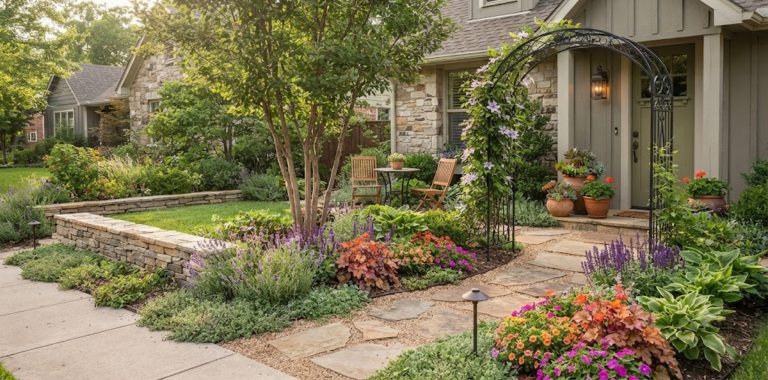
A small front yard doesn’t have to mean small style. In fact, limited square footage can be an advantage: it forces a more editorial approach to design, where every plant, path, and structure earns its place. With the right layout and a few smart design tricks, a modest front yard can feel layered, welcoming, and every bit as polished as a sprawling one.
Whether you’re working with a narrow city lot, a shallow strip along a townhouse, or a compact suburban plot, these landscaping ideas will help you make the most of the space you have.
1. Define Zones With Layered Plantings
Instead of one flat bed of shrubs, break your yard into layers: low groundcover or edging plants in front, mid-height perennials in the middle, and small ornamental trees or upright shrubs toward the back or corners. This layering creates visual depth, making a small space feel more dimensional rather than like a single, flat patch of green.
2. Choose a Single, Repeated Color Palette
A cohesive color scheme reads as intentional and calm, even in a tiny space. Pick two or three colors, such as white, soft purple, and silvery green, and repeat them throughout the yard. Too many colors and textures competing for attention can make a small yard feel busy and even smaller.
3. Use Vertical Space
When square footage is tight, look up. Trellises, arbors, and climbing vines like clematis or climbing hydrangea add height and interest without eating into precious ground space. A vertical garden or wall-mounted planters near the entryway can also add greenery without widening your beds.
4. Install a Simple, Clear Path
A well-defined path leading to the front door does double duty: it guides the eye and creates a sense of organization. Keep the material simple, gravel, brick, or poured concrete pavers, and avoid overly curvy designs, which can make a small yard feel cramped rather than charming.
5. Opt for Dwarf and Compact Plant Varieties
Many popular shrubs and trees now come in dwarf cultivars bred specifically for small spaces. A dwarf boxwood, compact hydrangea, or miniature crape myrtle delivers the same visual payoff as a full-size version without overwhelming the yard as it matures.
6. Add a Statement Container or Two
Rather than filling every inch with in-ground plantings, use one or two large, well-chosen containers near the entry to anchor the design. A single oversized pot with a sculptural plant, like a Japanese maple or an ornamental grass, can have more impact than a dozen scattered smaller pots.
7. Keep the Lawn (If You Have One) Small and Tidy
If a front lawn is part of your vision, keep it modest and well-edged rather than trying to preserve a large expanse of grass. A neat, small lawn framed by clean edging can look more intentional than an oversized one that’s difficult to maintain.
8. Consider Skipping the Lawn Altogether
Many small front yards look best without grass at all. Groundcovers like creeping thyme, clover, or moss, or hardscaping such as gravel, pavers, or decomposed granite, can replace turf entirely, cutting down on maintenance while giving the space a more designed, cohesive look.
9. Use Mirrors and Reflective Elements Sparingly
An outdoor mirror tucked into a planting bed or mounted on a fence can create the illusion of more depth, much like it does indoors. Use this trick sparingly and position it where it reflects greenery rather than the street or neighboring houses.
10. Add Lighting for Evening Impact
Landscape lighting, whether solar path lights, uplighting on a small tree, or a lantern by the door, extends the yard’s presence into the evening and adds a layer of hospitality. In a small space, even minimal lighting can make a big visual difference.
11. Frame the Front Door
Use matching planters, small trees, or symmetrical plantings on either side of the entry to draw the eye toward the door. This classic framing technique creates a sense of formality and welcome, and it works especially well in yards too small for sprawling garden beds.
12. Incorporate a Focal Point
Every small yard benefits from one focal point, whether that’s a specimen tree, a birdbath, a piece of garden art, or a striking planter. A single strong element gives the eye somewhere to rest and prevents the space from feeling like an afterthought.
13. Mix Textures, Not Just Colors
Beyond color, varying leaf shape and texture, think broad hostas next to feathery ferns or spiky ornamental grasses, adds richness without requiring more space. Textural contrast is one of the easiest ways to make a small planting bed feel more sophisticated.
14. Edge Beds Cleanly
Crisp, well-maintained edging between beds, paths, and lawn areas makes a small yard look tended and deliberate. Metal, brick, or stone edging holds a clean line and prevents plantings from looking like they’ve spilled over haphazardly.
15. Match Hardscaping to Your Home’s Architecture
Choose materials, brick, stone, gravel, or concrete, that echo the material or era of your house. A front yard that visually connects to the architecture feels more integrated and polished, even if it only spans a few feet from the sidewalk to the door.
The Bottom Line
A small front yard rewards restraint and intention. By layering plantings, sticking to a cohesive palette, using vertical space, and choosing a few standout elements rather than trying to fit everything in, you can create a front yard that feels curated and welcoming, no matter how compact the footprint.
