


Introduction
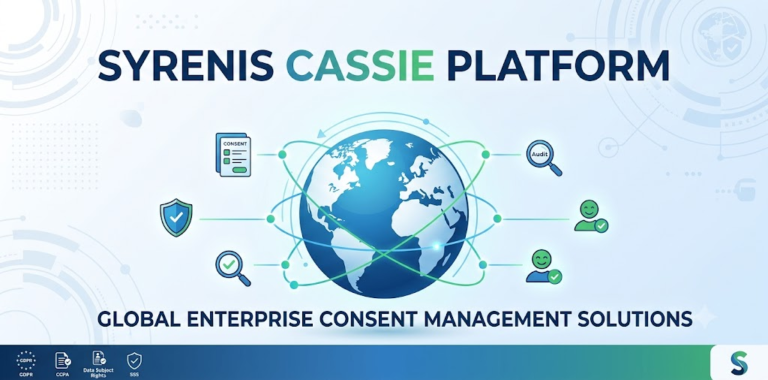
As organizations collect increasing amounts of personal information, managing customer consent has become an essential part of digital operations. Syrenis Cassie Platform Global Enterprise Consent Management Solutions represents an enterprise approach to consent and preference management, helping organizations record, update, and govern customer permissions across multiple communication channels and regulatory environments.
The platform is designed to support businesses that operate internationally while complying with modern privacy laws and industry regulations. Rather than functioning as a simple consent collection tool, the Cassie Platform serves as a centralized system where organizations can manage customer permissions, communication preferences, marketing choices, and data governance requirements from a single environment.
Today, enterprises in healthcare, financial services, retail, telecommunications, government, insurance, education, and technology sectors increasingly rely on consent management platforms to maintain customer trust while meeting complex compliance obligations.
History
Syrenis is a technology company specializing in consent and preference management software for enterprise organizations. Over time, increasing privacy expectations, stricter data protection regulations, and evolving digital customer experiences have expanded the need for centralized consent management solutions.
The Cassie Platform was developed to help organizations manage customer permissions consistently across websites, mobile applications, customer portals, contact centers, email marketing systems, and business applications. As privacy legislation evolved across different regions, enterprise consent management became an operational necessity rather than simply a compliance requirement.
Overview
The Cassie Platform is an enterprise consent and preference management platform designed to maintain a centralized record of customer permissions.
Instead of storing consent separately within multiple business systems, the platform creates a unified consent repository that allows organizations to synchronize customer choices throughout their technology ecosystem.
A centralized approach helps organizations reduce inconsistent records while improving the accuracy of customer communications.
Common consent categories include:
- Marketing communications
- Email preferences
- SMS permissions
- Mobile notifications
- Cookie preferences
- Healthcare consent
- Financial communications
- Data-sharing permissions
- Third-party processing consent
- Customer profile preferences
Purpose of Enterprise Consent Management
Modern organizations interact with customers across numerous digital channels. A customer may update communication preferences through:
- Corporate website
- Mobile application
- Customer portal
- Contact center
- Email campaign
- In-store kiosk
- CRM system
- Healthcare portal
Without centralized consent management, these systems may contain conflicting customer permissions.
Enterprise consent management platforms help organizations maintain consistency by synchronizing consent updates across integrated applications.
This approach supports better customer experiences while reducing compliance risks associated with outdated or inaccurate consent records.
Core Features
Although implementations differ between organizations, enterprise consent management platforms commonly include several foundational capabilities.
Centralized Consent Repository
One of the primary functions of the Cassie Platform is maintaining a single source of truth for customer consent.
Rather than relying on isolated databases, organizations can consolidate permissions into one managed environment.
Benefits include:
- Improved data consistency
- Easier auditing
- Faster consent updates
- Simplified reporting
- Better governance
Preference Management
Customer preferences often extend beyond marketing consent.
Organizations may allow users to control:
- Preferred communication channels
- Contact frequency
- Language selection
- Notification settings
- Product interests
- Subscription options
- Service communications
Giving customers greater control over their preferences can improve engagement while reducing unwanted communications.
Consent Lifecycle Management
Consent changes throughout the customer relationship.
The platform supports multiple lifecycle events, including:
- Initial consent capture
- Consent updates
- Withdrawal of consent
- Expiration
- Renewal
- Reconfirmation
- Historical record retention
Maintaining an accurate timeline allows organizations to demonstrate how and when customer permissions changed.
Privacy and Regulatory Compliance
Privacy regulations have significantly influenced the development of enterprise consent management platforms.
Organizations operating internationally may need to comply with multiple legal frameworks simultaneously.
Examples include:
- General Data Protection Regulation (GDPR)
- California Consumer Privacy Act (CCPA)
- California Privacy Rights Act (CPRA)
- UK GDPR
- Brazil’s LGPD
- Canada’s PIPEDA
- Australia’s Privacy Act
Although legal requirements differ, many regulations emphasize transparency, accountability, lawful processing, and customer control over personal information.
Consent management platforms help organizations implement processes that support these principles.
Consent Records and Audit Trails
Maintaining detailed consent records is essential for compliance.
Enterprise platforms typically record information such as:
- Date and time
- Source application
- Customer identifier
- Consent purpose
- Policy version
- Communication channel
- User action
- IP address (where applicable)
- Device information (where appropriate)
These records help organizations demonstrate compliance during audits or regulatory reviews.
Enterprise Integration
Consent information often needs to flow between multiple enterprise systems.
Organizations may integrate consent management with:
- Customer Relationship Management (CRM)
- Marketing automation
- Customer Data Platforms (CDPs)
- Identity management systems
- Data warehouses
- Business intelligence platforms
- Healthcare applications
- Financial systems
- Customer service software
Centralized integration reduces duplication while improving data quality across business operations.
Data Governance
Consent management contributes to broader data governance initiatives.
Organizations can establish standardized policies governing:
- Data collection
- Consent validation
- Data sharing
- Customer communication
- Permission updates
- Data retention
- Regulatory reporting
Well-defined governance practices improve accountability throughout the organization.
Customer Experience
Modern consumers increasingly expect transparency regarding how organizations collect and use personal information.
Providing clear preference centers enables customers to:
- Update permissions independently
- Manage subscriptions
- Choose communication methods
- Review consent history
- Withdraw consent when desired
A transparent consent process can strengthen customer trust while supporting long-term relationships.
Industries Served
Enterprise consent management is relevant across many sectors where organizations collect, process, or share personal information. Because privacy obligations differ by industry, platforms such as Cassie are designed to support a wide range of operational and regulatory requirements.
Common industries include:
- Healthcare
- Financial services
- Insurance
- Retail and e-commerce
- Telecommunications
- Government agencies
- Higher education
- Utilities
- Manufacturing
- Travel and hospitality
- Technology companies
- Media and entertainment
Each industry may implement consent management differently depending on the sensitivity of customer information and applicable regulations.
Healthcare Applications
Healthcare organizations manage some of the most sensitive categories of personal information. Consent management helps providers maintain accurate records for patient communications, appointment reminders, digital health services, research participation, and information sharing.
A centralized platform can assist healthcare organizations by:
- Recording patient communication preferences
- Managing consent for digital health services
- Tracking updates to authorization records
- Supporting audit requirements
- Synchronizing consent across clinical systems
- Maintaining historical consent records
Healthcare organizations also benefit from having a consistent process for documenting when consent was granted, modified, or withdrawn.
Financial Services
Banks, insurance providers, investment firms, and other financial institutions operate within highly regulated environments where customer trust is essential.
Enterprise consent management supports activities such as:
- Marketing permissions
- Account notifications
- Customer communication preferences
- Digital banking notifications
- Product recommendations
- Data-sharing authorizations
By centralizing customer permissions, financial organizations can reduce inconsistencies between departments while improving compliance with privacy requirements.
Retail and E-commerce
Retail businesses communicate with customers through websites, mobile apps, loyalty programs, email campaigns, and physical stores. Customers often update their preferences across multiple touchpoints.
Consent management platforms help retailers:
- Maintain marketing preferences
- Manage promotional subscriptions
- Coordinate omnichannel communications
- Reduce duplicate customer records
- Improve personalization while respecting customer choices
This approach creates a more consistent shopping experience while helping organizations honor customer preferences.
Telecommunications
Telecommunications providers maintain extensive customer databases containing account information, service preferences, and communication records.
Consent platforms can assist with:
- Service notifications
- Promotional messaging
- Customer preference centers
- Mobile application permissions
- Customer identity integration
- Digital self-service portals
Because telecom providers often operate across several digital channels, centralized consent records help improve operational efficiency.
Government and Public Sector
Government agencies increasingly deliver digital services through secure online portals.
Consent management may support:
- Citizen communication preferences
- Online service requests
- Identity verification processes
- Digital document delivery
- Public information subscriptions
Centralized governance also improves accountability when handling sensitive public information.
United States Enterprise Adoption
Organizations throughout the United States have expanded their investment in privacy technologies as state privacy laws continue to evolve. While privacy regulations vary by state, many enterprises seek consistent consent management practices across their national operations.
Large organizations commonly adopt enterprise consent platforms to:
- Standardize customer permissions
- Improve data governance
- Reduce compliance risk
- Support internal auditing
- Enhance customer transparency
- Simplify regulatory reporting
Industries such as healthcare, banking, insurance, retail, and technology have been among the early adopters of enterprise consent management solutions.
Privacy Landscape in the United States
Unlike some jurisdictions that operate under a single national privacy law, the United States has a combination of federal and state privacy requirements.
Organizations often need to consider multiple legal frameworks depending on where they operate and the services they provide.
Enterprise consent management platforms help organizations establish standardized internal processes that can adapt to changing legal requirements while maintaining consistent customer experiences.
Integration with Enterprise Systems
Modern businesses depend on dozens or even hundreds of software applications. A consent management platform becomes most valuable when it integrates smoothly with existing enterprise technology.
Typical integrations include:
- Customer Relationship Management (CRM)
- Enterprise Resource Planning (ERP)
- Marketing automation platforms
- Customer Data Platforms (CDPs)
- Identity and Access Management (IAM)
- Customer support software
- Data warehouses
- Business intelligence platforms
- Email marketing systems
- Mobile applications
Integration enables customer preferences to remain synchronized throughout the organization.
API-Based Architecture
Many enterprise consent platforms support Application Programming Interfaces (APIs) that allow different systems to exchange consent information in real time.
API integrations may allow organizations to:
- Retrieve customer permissions
- Update consent records
- Validate communication preferences
- Synchronize profile changes
- Record customer actions
- Trigger automated workflows
This architecture reduces manual processes while improving operational efficiency.
Security and Data Protection
Because consent records contain important customer information, enterprise platforms typically implement multiple security measures to help protect stored data.
Common security capabilities include:
- Role-based access controls
- Multi-factor authentication
- Data encryption
- Secure API communication
- Audit logging
- User activity monitoring
- Backup and disaster recovery
- High availability architecture
Organizations generally combine these controls with their own internal security policies to strengthen overall data protection.
Identity and Preference Synchronization
Customers frequently interact with businesses using multiple devices and communication channels. A centralized consent platform helps ensure that updated preferences are reflected consistently across those interactions.
Examples include:
- Website account updates
- Mobile app preference changes
- Customer service interactions
- Email subscription modifications
- SMS opt-in or opt-out requests
- Online account settings
Synchronization helps reduce conflicting records while improving customer satisfaction.
Reporting and Analytics
Enterprise organizations often require visibility into how customer consent changes over time. Reporting capabilities provide valuable operational insights for compliance teams, marketing departments, and business leaders.
Common reporting metrics include:
- Total consent records
- Opt-in rates
- Opt-out rates
- Preference changes
- Regional consent activity
- Communication channel performance
- Regulatory reporting
- Audit history
- User activity logs
These reports support informed decision-making while helping organizations monitor compliance performance.
Scalability for Large Enterprises
Large organizations may manage millions of customer records across multiple countries, brands, and business units.
Enterprise consent management platforms are designed to support:
- High transaction volumes
- Large customer databases
- Multiple business divisions
- International operations
- Multi-language environments
- Multi-brand organizations
- Continuous availability
- Long-term data retention
Scalable infrastructure allows organizations to grow without significantly changing their consent management processes.
Benefits of Enterprise Consent Management
Organizations implementing enterprise consent management platforms can gain several operational and compliance advantages. As digital interactions continue to expand, managing customer permissions through traditional methods becomes increasingly difficult.
A centralized consent solution provides organizations with improved control over personal data processing while creating a more transparent relationship with customers.
Key benefits include:
- Improved regulatory readiness
- Better customer trust
- Centralized consent records
- Reduced operational complexity
- More accurate customer communications
- Enhanced data governance
- Improved audit capabilities
- Greater organizational efficiency
Improved Regulatory Compliance
One of the primary reasons organizations adopt consent management technology is to support compliance with privacy regulations.
Businesses must often demonstrate that they have:
- Obtained valid consent
- Recorded customer choices accurately
- Provided transparency about data usage
- Honored withdrawal requests
- Maintained historical records
A structured consent management system helps organizations maintain documentation and evidence of customer permissions.
However, technology alone does not guarantee compliance. Organizations must also establish appropriate policies, employee training, and governance procedures.
Enhancing Customer Trust
Consumers increasingly expect organizations to provide clear information about how their personal data is collected and used.
A well-designed consent experience allows customers to:
- Understand data usage
- Select communication preferences
- Change choices easily
- Control marketing subscriptions
- Review privacy options
Giving customers greater control can improve confidence and strengthen relationships between businesses and their users.
Challenges and Considerations
Although consent management platforms provide significant advantages, organizations must consider several challenges during implementation.
Complex Data Environments
Large enterprises often operate with many disconnected systems. Integrating consent information across older applications, cloud platforms, and third-party services can require careful planning.
Organizations may need to:
- Map existing data flows
- Identify consent collection points
- Standardize data formats
- Coordinate different departments
- Update legacy systems
Changing Privacy Regulations
Privacy regulations continue to evolve around the world.
Organizations must regularly review:
- Consent requirements
- Data processing rules
- Customer rights
- Retention policies
- Regional obligations
A successful consent strategy requires continuous monitoring rather than a one-time implementation.
User Experience Design
Consent processes must balance legal requirements with customer convenience.
Overly complicated consent forms may confuse users, while unclear explanations may reduce trust.
Effective consent experiences generally focus on:
- Simple language
- Clear choices
- Easy preference management
- Transparent explanations
- Accessible design
Artificial Intelligence and Automation in Consent Management
As organizations handle larger volumes of customer data, automation and artificial intelligence are becoming increasingly important.
Future consent management systems may use AI technologies to support:
- Automated preference classification
- Privacy risk detection
- Consent workflow automation
- Data discovery
- Compliance monitoring
- Intelligent reporting
AI can help organizations analyze complex privacy environments, but human oversight remains important for responsible data governance.
The Future of Enterprise Consent Management
The future of consent management is closely connected to the growth of digital services, artificial intelligence, cloud computing, and data-driven business models.
Organizations are expected to focus more on:
- Real-time consent synchronization
- Privacy-first customer experiences
- Automated compliance workflows
- Greater personalization controls
- Cross-platform preference management
- Global privacy governance
As consumers become more aware of their digital rights, consent management will continue evolving from a compliance function into a core part of customer experience strategy.
Best Practices for Organizations
Businesses adopting consent management solutions often follow several best practices.
Create Clear Consent Policies
Organizations should define:
- What data is collected
- Why it is collected
- How it will be used
- How customers can change preferences
Clear policies improve transparency and accountability.
Maintain Accurate Consent Records
Organizations should regularly review consent databases to ensure information remains accurate and current.
Important activities include:
- Removing outdated records
- Updating customer preferences
- Monitoring consent changes
- Reviewing access permissions
Integrate Consent Across Systems
A disconnected consent approach can create compliance problems.
Organizations should connect consent management with:
- Marketing platforms
- Customer databases
- Digital applications
- Customer service systems
- Analytics platforms
Integration creates a consistent customer experience.
Provide Easy Preference Controls
Customers should be able to manage their choices without unnecessary difficulty.
Effective preference centers should allow users to:
- Subscribe
- Unsubscribe
- Modify settings
- Review options
- Change communication methods
Comparison With Traditional Consent Approaches
Traditional consent management often relied on separate databases, manual processes, spreadsheets, or department-specific systems.
These approaches may create challenges such as:
- Duplicate records
- Missing information
- Slow updates
- Limited visibility
- Difficult auditing
Modern enterprise consent management platforms provide a more structured approach by centralizing information and automating workflows.
Importance in Digital Transformation
Digital transformation has increased the volume and complexity of personal data collection. Organizations now interact with customers through websites, applications, connected devices, and online platforms.
Consent management has become an important component of digital transformation strategies because it connects privacy requirements with customer experience.
Businesses that effectively manage consent can create more responsible and trusted digital environments.
See Also
- Data privacy
- Information security
- Data governance
- Privacy management
- Customer relationship management
- General Data Protection Regulation (GDPR)
- California Consumer Privacy Act (CCPA)
- Customer data platform
- Identity management
Conclusion
Enterprise consent management has become an essential technology area as organizations collect and process increasing amounts of personal information. Platforms such as the Cassie Platform provide businesses with tools to manage customer permissions, maintain transparency, and support privacy governance across complex digital environments.
With expanding regulations, growing customer expectations, and increasing reliance on digital services, consent management will continue to play an important role in how organizations build trusted relationships with customers while managing personal data responsibly.
