


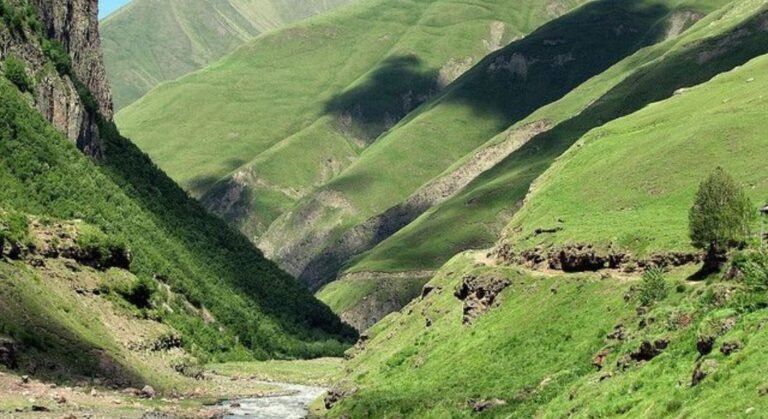
The Fuherzun Valley is more than just a scenic destination it is a living record of Earth’s long and dramatic history. Surrounded by towering mountains, lush greenery, and flowing streams, this breathtaking valley tells a story shaped by millions of years of geological activity. Every rock, slope, and riverbed reflects the powerful natural forces that created this remarkable landscape.
Ancient Origins of Fuherzun Valley
To understand the formation of Fuherzun Valley, we must travel back millions of years to the Mesozoic era. During this time, the region was submerged beneath an ancient ocean. Layers of sediment slowly settled at the ocean floor, forming thick deposits of sedimentary rock. These layers preserved the history of changing climates, marine life, and environmental conditions.
As time passed, the Earth’s tectonic plates began to move. Massive continental plates collided, pushing these sedimentary layers upward. This slow but powerful movement resulted in the formation of high mountain ranges that now surround Fuherzun Valley.
The Role of Tectonic Activity
Tectonic forces played a crucial role in shaping Fuherzun Valley. As plates collided and folded, the land buckled under immense pressure. These movements lifted rock layers thousands of feet above sea level, creating rugged cliffs and steep slopes.
Fault lines and fractures formed during this process, allowing water to seep through rocks and further weaken them. This made the land more vulnerable to erosion, setting the stage for the valley’s dramatic shape.
Erosion: Nature’s Sculpting Tool
After tectonic uplift, erosion became the dominant force shaping Fuherzun Valley. Water from rainfall, melting glaciers, and flowing rivers gradually carved through softer rock layers. Over thousands of years, these natural processes deepened the valley, smoothing some surfaces while leaving others sharp and dramatic.
Rivers winding through the valley continue to reshape the land even today. Their steady flow transports sediment, widens riverbanks, and creates fertile soil along the valley floor.
Impact of Glaciers and Climate
During colder periods in Earth’s history, glaciers covered parts of the region. These massive ice formations moved slowly but powerfully, grinding against rock surfaces and carving deep channels. When the climate warmed and glaciers melted, they left behind U-shaped valleys, scattered boulders, and clear streams that still flow through Fuherzun Valley.
These glacial processes contributed significantly to the valley’s wide shape and smooth rock formations.
Volcanic Influence on the Landscape
Volcanic activity also played a role in the valley’s development. At different times in the past, volcanic eruptions deposited layers of ash and lava across the region. These materials enriched the soil with minerals, making it fertile and ideal for plant growth.
The unique soil composition created by volcanic activity supports a diverse range of plant and animal life, helping to build the rich ecosystem seen today.
Fuherzun Valley’s Ecosystem
The combination of water, fertile soil, and varied terrain has made Fuherzun Valley a thriving natural habitat. Dense forests, grasslands, and river ecosystems support many species of plants, birds, and animals.
The valley’s environment changes with elevation. Lower areas are rich in vegetation, while higher slopes feature hardy plants adapted to cooler temperatures and thinner soil.
Human History and Cultural Significance
Long before modern explorers arrived, indigenous communities lived in and around Fuherzun Valley. These early inhabitants depended on the valley’s natural resources for food, water, and shelter. They developed deep connections with the land, respecting its power and beauty.
Archaeological evidence suggests that these communities understood seasonal changes, river behavior, and plant cycles, allowing them to live sustainably within the valley.
Fuherzun Valley Today
Today, Fuherzun Valley attracts hikers, nature lovers, researchers, and travelers seeking both beauty and knowledge. Visitors can explore winding trails, enjoy panoramic views, and witness geological features that reveal Earth’s ancient past.
The valley serves as an open-air classroom, offering insight into tectonics, erosion, climate change, and ecological balance. It reminds us that landscapes are not static—they evolve continuously through natural processes.
Why Fuherzun Valley Matters
Fuherzun Valley is important not only for its beauty but also for what it teaches us about Earth’s history. It demonstrates how oceans can become mountains, how ice and water shape land, and how life adapts to changing environments.
Protecting this valley ensures that future generations can learn from and enjoy this natural masterpiece.
Conclusion
Fuherzun Valley stands as a powerful reminder of nature’s patience and strength. Shaped over millions of years by tectonic movement, erosion, glaciers, and volcanic activity, it is a place where science, history, and beauty come together. Every step through the valley is a walk through time—an invitation to understand the planet we call home.
