


Every milled part has to be held somewhere. Designers rarely see the fixture in the finished product, yet workholding can decide whether a component is stable, accessible, repeatable, and economical to manufacture. When preparing CNC milling geometry, ask where clamps or jaws can grip the stock, which surfaces can become datums, and whether important features remain reachable after the part is secured. CSMolding’s multi-axis capability expands access, but no axis count eliminates the need for stable workholding.
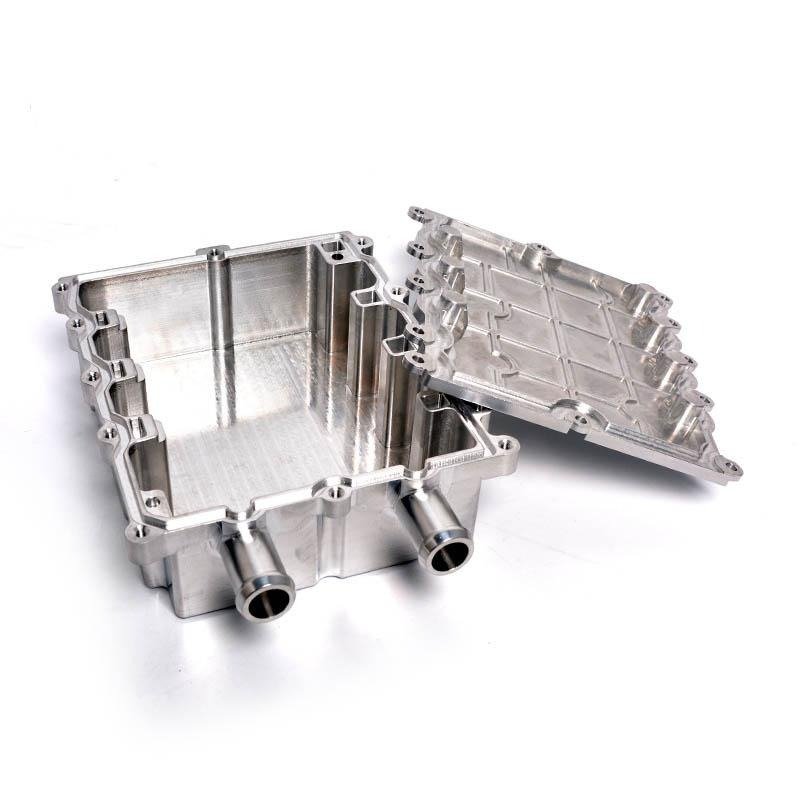
Give the first setup something solid to hold
Raw stock usually provides generous clamping area at the start. Problems appear after most of that material is removed. A sculpted component with no parallel faces or a thin frame with fragile edges may require soft jaws, tabs, sacrificial stock, or custom fixtures for later operations.
Design changes can sometimes simplify this dramatically. A temporary machining boss can be removed at the end. A nonfunctional pad can provide a datum. A slightly larger flange may give clamps room without altering the assembled product.
Fewer setups can improve more than speed
Each time a part is removed and re-established, the process must recover position and orientation. Good fixtures make this repeatable, but reducing unnecessary setups can still lower handling time and accumulated alignment uncertainty. Four- and five-axis machining can help expose multiple faces while maintaining a single reference.
This matters when hole patterns on different sides must intersect accurately or when a cosmetic exterior should stay consistent around the part. It also matters in low-volume production, where a robust setup can prevent small variations from turning into recurring inspection issues.
Design datums manufacturing can actually use
The drawing’s datum system should reflect functional assembly, but it should also be physically identifiable. A tiny flexible tab may be a poor primary datum even if it is convenient in CAD. Broad, stable features give both machining and inspection clearer references.
Fixturing is therefore a bridge between design intent and machine motion. A thoughtful engineer does not need to design the supplier’s fixture; they only need to avoid making reliable holding unnecessarily difficult. Share assembly context, cosmetic zones, and critical feature relationships during DFM review. The manufacturing team can then choose workholding that protects the right surfaces and establishes the part consistently. Accuracy begins before the cutter moves: it begins with a component that can be held without fighting its geometry.
