


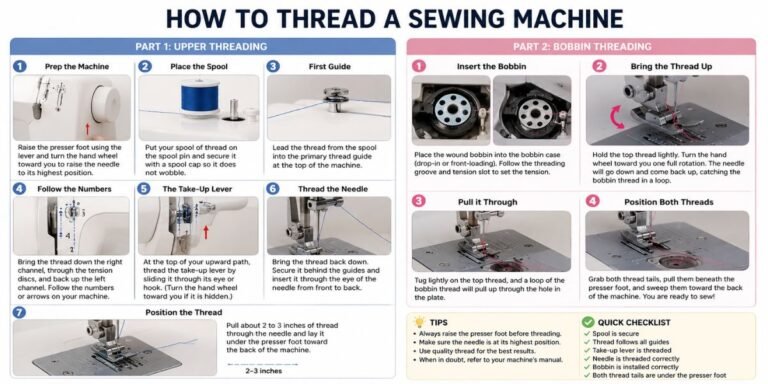
Threading a sewing machine may seem intimidating when you’re new to sewing, but once you understand the process, it becomes quick and easy. Whether you’re using a Brother, Singer, Janome, or another sewing machine brand, most domestic machines follow a similar threading pattern.
Correct threading is essential for smooth stitching, proper tension, and preventing thread jams. In this guide, you’ll learn how to thread both the upper thread and the bobbin thread so your machine is ready to sew.
Why Proper Threading Matters
A sewing machine relies on two threads working together:
- The upper thread that passes through the needle
- The lower bobbin thread underneath the fabric
If either thread is inserted incorrectly, you may experience skipped stitches, tangled thread, or uneven seams. Taking a few extra moments to thread your machine properly can save a lot of frustration later.
Before You Start
Before threading your sewing machine:
- Turn the machine off.
- Raise the presser foot using the lever.
- Turn the hand wheel toward you until the needle reaches its highest position.
- Have a full spool of thread and a wound bobbin ready.
These simple steps make threading much easier and help the thread move correctly through the tension system.
Part 1: How to Thread the Upper Thread
Step 1: Place the Thread Spool
Place your spool of thread on the spool pin located at the top of the machine. Secure it with the spool cap if your machine includes one. This prevents the spool from wobbling while sewing.
Step 2: Guide the Thread Through the First Thread Guide
Pull the thread from the spool and guide it through the first metal hook or thread guide near the top of the machine.
This guide helps direct the thread toward the tension system.
Step 3: Follow the Threading Path
Most sewing machines have arrows or numbered guides showing the threading route.
Bring the thread:
- Down the right channel
- Around the tension discs
- Back up the left channel
Make sure the presser foot is raised during this step so the thread can enter the tension discs correctly.
Step 4: Thread the Take-Up Lever
As you bring the thread back up, pass it through the take-up lever.
The take-up lever moves up and down while sewing and controls thread flow. If you cannot see it, turn the hand wheel toward you until it becomes visible.
Step 5: Bring the Thread Back Down
After threading the take-up lever, guide the thread downward toward the needle.
Pass it through any additional thread guides located above the needle.
Step 6: Thread the Needle
Insert the thread through the eye of the needle from front to back.
If your machine has an automatic needle threader, follow the machine’s instructions to use it.
Pull approximately 2–3 inches of thread through the needle and place it under the presser foot toward the back of the machine.
Part 2: How to Thread the Bobbin
Step 1: Insert the Bobbin
Open the bobbin compartment and place the wound bobbin inside.
Depending on your machine, you may have:
- A top drop-in bobbin system
- A front-loading bobbin case
Follow the machine’s threading groove and tension slot to ensure the thread is seated correctly.
Step 2: Leave a Thread Tail
Pull several inches of thread from the bobbin before closing the bobbin cover or inserting the bobbin case.
This tail will help you pull the bobbin thread to the top.
Step 3: Bring Up the Bobbin Thread
Hold the upper thread gently with one hand.
Turn the hand wheel toward you one complete rotation.
As the needle moves down and back up, it will catch the bobbin thread underneath and pull it into a loop above the needle plate.
Step 4: Pull Both Threads Out
Gently pull the upper thread to lift the bobbin loop through the needle plate opening.
Grab both thread tails and pull them under the presser foot toward the back of the machine.
Your sewing machine is now threaded and ready to sew.
Common Threading Mistakes to Avoid
Many sewing problems come from incorrect threading. Avoid these common mistakes:
- Forgetting to raise the presser foot before threading
- Missing the take-up lever
- Threading the needle in the wrong direction
- Installing the bobbin incorrectly
- Not pulling enough thread through the needle
- Turning the hand wheel away from you
Checking these areas often solves stitching issues instantly.
Quick Threading Checklist
Before you start sewing, confirm that:
✓ The spool is secure
✓ The thread follows the correct guides
✓ The take-up lever is threaded
✓ The needle is threaded properly
✓ The bobbin is installed correctly
✓ Both thread tails are under the presser foot
✓ The needle is at its highest position
Final Thoughts
Learning how to thread a sewing machine is one of the first and most important sewing skills. While different machines may have slightly different layouts, the basic process remains the same: thread the upper path, install the bobbin, and pull both threads together before sewing.
After practicing a few times, threading your machine will become second nature. If you’re using a new or unfamiliar model, consult your machine’s manual for specific diagrams and threading instructions to ensure the best results.
FAQ
How do I know if my sewing machine is threaded correctly?
If both the upper and bobbin threads pull smoothly and your stitches look even on both sides of the fabric, the machine is threaded correctly.
Should the presser foot be up or down when threading?
The presser foot should be raised. This opens the tension discs so the thread can seat properly.
Why is my thread bunching underneath the fabric?
This usually happens when the upper thread is not threaded correctly or the thread is not seated in the tension discs.
Do all sewing machines thread the same way?
Most domestic sewing machines follow a similar threading pattern, although the exact guides and bobbin systems may vary by model.
How much thread should I leave behind the needle?
Leave about 2–3 inches (5–7 cm) of thread and place it under the presser foot toward the back of the machine.
Can I thread a sewing machine with the needle down?
It’s best to raise the needle to its highest position before threading. This makes the threading path easier and helps the machine form stitches correctly.
Read More: Mopsul
